Monday, December 30, 2013

January Shred Rule #5: Plan Your Food Every Day!


Missed the Introduction to the January Shred? Click HERE.

Plan your food every day!

If you don't have a plan for success, you have effectively created a plan for failure. Plan out all of your food for the day at least the day before and then stick to it. Impulse eating is so dangerous because you probably won't impulse eat a few broccoli crowns...it will be cookies or candy or something like that. It is amazing how much we plan various areas of our lives, but sometimes when it comes to something like food, we fly by the seat of our pants and then throw whatever looks good into our stomach. This is a bad plan. If you are married, sit down with your spouse and plan your meals for the upcoming week. You are going to need to have your spouse's buy in on this if you want to be successful. If you are single, you just have to convince yourself...good luck with that :)

How I suggest you start planning your food

Matt & Leigh's meal plan for the January Shred
If you really want to be successful, plan out your dinners for the ENTIRE MONTH. I know that will take a little bit of time, but it will be well worth it, and you'll also save some grocery money! How about that?!?! Get in better shape and save some money! #WINNING!

If you have a calendar, write down what you plan to eat each evening. While you are at it, plan out which days of your week are going to be the "rest days" where you aren't doing Boot Camp or strength training. These are your low carb days, so you'll definitely need to plan well for those days. Not sure what has carbs? You may need to do a little research and learn how to read food labels; but fruits, sugars, breads and starches are things you'll want to avoid on a low carb day. Basically, stick to lean meats and veggies and you're likely to be successful there.

As you can see, the photo to the right is the meal plan Leigh and I came up with. This is only dinners, so lunch I'll have to plan out as well. The dates that are circled (Tues & Thurs) are our low carb meals. You'll notice there are no potatoes and rice on those days. You'll also notice I can't spell very well without spell-check...so if you feel the need to call me out on that go ahead, you won't be telling me anything I don't already know :) You will also notice that I can basically eat the same types of foods over and over without going completely insane. That is both good and bad. If you have a lot more variety in your meal plan...awesome! I'll freely admit we don't experiment a whole lot with food, so our "go to" healthy meals are fairly limited.

How you know if you are performing Rule #5 successfully

In order to avoid losing a point for not properly performing Rule #5 on a given day, you'll need to have a plan for what you are going to eat by at least the night before. That means before you wake up tomorrow morning, you have already planned out your meals and any snacks that you are going to eat for the day. Then the kicker...you have to stick to it! If you break the plan and impulse eat on something you shouldn't, you cannot take credit for successfully completing rule #5.

Helpful Tip

Don't go to the grocery store on an empty stomach. Bad choices that you could normally pass on look down right irresistible when your stomach is growling. Try to shop after a meal, and make a list and stick to the grocery list! If there is bad food in the house, I'm going to find it and I'm going to eat it. The solution? Don't put bad food in the house!

Scripture for the Day

Ecclesiastes 4:9-12 "Two are better than one, because they have a good return for their labor: If either of them falls down, one can help the other up. But pity anyone who falls and has no one to help them up. Also, if two lie down together, they will keep warm. But how can one keep warm alone? 
Though one may be overpowered, two can defend themselves. A cord of three strands is not quickly broken."

You need other friends in your life to stand with you. There is strength in numbers. Whether your application is having other friends to support your health and fitness journey, or your spiritual growth...don't try to do it alone!

Sunday, December 29, 2013

January Shred Rule #4: Intermittent Fasting

Missed the Introduction to the January Shred? Click HERE.

What is intermittent fasting?

Before I give you my explanation, please go HERE and watch a short video where Dr. Mercola explains some of the benefits of intermittent fasting. You might read some of the article as well.

Intermittent fasting (IF) in layman’s terms is basically having a period of time each day where you don’t eat. The concept is involves forcing the body to burn fat stores for energy during the fasted period of the day. To understand how this is possible, you first need a very basic understanding of how the body burns calories for energy. The body will always prefer burning carbohydrates first, then fats, and then proteins. Carbohydrates quickly break down into glycogen which your body will always burn before it digs into fat reserves for energy. If there is no available glycogen, your body will convert fat stores into energy…which is what we want! However, at some point if there is still no available glycogen, your body may begin to dig into intramuscular fat and catabolize your muscle (protein). This is what we don’t want and one of the reasons we don't want to have an extremely long fasted period (20+ hours).

Now that you understand the priority of your body’s energy usage, you can understand that depleting glycogen reserves will cause your body to burn more fat for energy. Through much research, case studies, and personal tweaking, a nutritional consultant and personal trainer named Martin Berkhan developed the “LeanGains” program. Berkhan, who operates a blog (www.leangains.com), has essentially written the book on how to effectively use I.F. for fat loss while gaining muscle. He has found that a fasting window of 16 hours for men, and 14 hours for women is the most effective way to burn fat while maintaining muscle. Sure you can push the window out further and go for 18 to 20 hours fasted, but that becomes very hard to do practically for long periods of time.

This is going to be a massive over-simplification, but right after you eat, your body stops burning fat. It doesn't need to burn fat for energy because it has energy available through the absorption of carbohydrates. A few hours after eating, your body might begin to burn a very, very small percentage of fat, but still almost all carbohydrate. After sleeping for 8 hours, you are burning more fat, for ease of explanation, let's say 50/50. After 16 hours of fasting, you are burning mostly fat. This is why 14-16 hours is the sweet spot.

How I suggest you start intermittent fasting

Unlike Dr. Mercola, I think you can jump into IF pretty quickly and get to your 14 hour or 16 hour fasting window in a day or two. Start off with a 12 hour fast on the first day, then as you assess your success move to 14 and then 15 or 16 hours. You can do this by setting a cutoff time for food in the evening. I suggest 8pm. If you start with a 12 hour fast, you can eat the next morning starting at 8am. My intermittent fasting schedule is from 8pm until 12pm noon the next day (16 hours).

How you know if you are performing Rule #4 successfully

During the first week, as long as you have a 12 to 16 hour fasting window for men and a 12-14 hour fasting window for women, you are successfully completing rule #4. However, after the first week, for men you'll need to have a 16 hour fasting window, and 14-15 hour fasting window for women. Remember, during the fasting window, you cannot consume any calories. The exception is a little creamer in coffee or calories contained in pre-workout mixes. Regardless, these exceptions still need to be less than 75 calories. The idea is to burn fat everyday during your fasting window.

Helpful Tip

Drink LOTS of water during the fasting window as this will help you deal with the hunger you are likely to experience. Don't worry, you aren't going to die if your stomach growls a little. After a few days the hunger begins to be much easier to deal with...and eventually you won't even notice it.

Introducing the January Shred!


Check out our the January Shred video HERE.

To help get you kick-started on your health and fitness goals for 2014, I'm inviting you to join me on a January Shred! If you are anything like me, you ate a little sloppy during the holidays and probably gained at least a little unhealthy weight. With the start of the new year comes an opportunity to mentally wipe the slate clean and start fresh. So get your head right and lets shred some fat!

To start off, the January Shred is not a crash diet...it is 10 simple rules that you'll need to follow every day during the month of January. Fair warning, while the plan is simple, that doesn't mean it won't be tough. There is no magic pill you can take to get in shape, and the only free thing I know of is salvation. Other than that, you've got to put in the work for whatever it is that you want. This will take hard work and a whole lot of discipline, but if you stick with it, you'll see some fantastic results and gain some serious momentum to start the year off!

Here are the 10 rules:


The first 3 are exercise related, and the last 7 are nutrition related. That isn't by accident. Exercise is very important, but you can't out-exercise bad eating habits. I'll be providing more explanation and details on each of these rules in future blog posts:
  1. Perform at least 2 High-Intensity exercise sessions each week - Boot Camp is considered a high-intensity exercise session, so for those of you doing Boot Camp, don't miss a workout! Click HERE for more details on Rule #1.
  2. Strength training at least 2 days per week outside of Boot Camp - Strength training provides a "double" calorie burn because you burn calories while performing the exercise, and you continue to burn calories at rest while your body repairs the muscles you broke down during strength training. Click HERE for more details on Rule #2.
  3. Walk on your rest days - On the days you don't do Boot Camp or strength training, get in a 30-45 minute low intensity walk. This will help you burn more calories without sacrificing your body's need to recover. Click HERE for more details on Rule #3.
  4. Intermittent Fasting - Say what? Yes, a daily fast. Because intermittent fasting (IF) is not mainstream (yet), you may not have ever heard of it. Therefore, this will be the first of the 10 rules that I'll blog about with more details. Intermittent fasting is a going to be a major key to your fat burning potential. Click HERE for more details on Rule #4.
  5. Plan your food every day! - If you don't have a plan for success, you automatically have created a plan for failure. Plan out all of your food for the day at least the day before and then stick to it. Impulse eating is so dangerous because you probably won't impulse eat a few broccoli crowns...it will be cookies or candy or something like that. If you really want to be successful, plan out your meals for the entire week, and never go grocery shopping when you are hungry! Click HERE for more details on Rule #5.
  6. Don't eat or drink "empty" calories - Start off with this one by not drinking your calories. That means coke, tea, and alcoholic beverages are off limits. Also, avoid any unnecessary snacking. You don't need to eat every few hours just for the heck of it...and if your stomach growls a little here and there that isn't a bad thing. Click HERE for more details on Rule #6.
  7. Avoid carbs on your rest days - On the days you don't do Boot Camp or strength training, try to go as low carb as possible. You'll definitely need to plan ahead for these days as the majority of the foods you probably like to eat are loaded with carbs (I know that is the case for me). If you have to have a few carbs that is ok, but shoot for 40g of carbs or less on these days. BTW...you may need some extra caffeine on these days because your energy levels will be lower due to the reduced carbs. Click HERE for more details on Rule #7.
  8. Eat plenty of protein - Every day you should try to get plenty of protein. Shoot for .6g or more per pound of body weight. If you weigh more than 250lbs, shoot for a total of 150g protein per day. Getting protein through lean meats (chicken, tuna, lean pork, lean ground turkey, lean steak) is the best source. Next is egg whites and low fat dairy (milk, cheese), and then of course you can supplement through protein powders/shakes. Click HERE for more details on Rule #8.
  9. Eat 2-3 portions of green veggies per day - Broccoli, brussel sprouts, cabbage, zucchini, asparagus, spinach, green beans, peas, lettuce, collards, leeks, etc. Green veggies are extremely low calorie, but are also nutritious and very filling. When you make it a point to eat 2-3 servings of these little beauties each day, you are helping to avoid the more calorie dense foods that can throw off your fat loss plan. Add veggies to some lean protein and you have a filling meal that is also low calorie! Click HERE for more details on Rule #9.
  10. Eat out only 1 time during the week and 1 time on the weekend - This is a tough one because it requires extremely good planning and discipline. For your out to eat during the week, make a good decision. For example, a low calorie sub at Subway on wheat bread. For your out to eat meal on the weekend, you are allowed to cheat in order to keep your sanity...but just restrict it to that one meal...not an all day calorie stuffing binge. Click HERE for more details on Rule #10.
So there you have it. 10 simple rules that are much easier to type out than they are to follow. If you can keep all 10 rules for the entire month of January, you are going to shred some serious fat.

Want to join in? Here is what you need to do:

First, e-mail me (include your name) at matt.abele40@gmail.com and let me know you are participating in the January Shred. Next, be sure to take a picture of yourself, weigh yourself and try to get any measurements you can. I'll ask you do these same measurements again at the end of the month so that you can track your results.

** Clarification: The pictures and measurements are for you to track your progress. I won't be asking you to send those to me unless you just want me to share your success!

Oh yes, we are keeping score!

We are going to be keeping score, and each week I'll post a list of participants and scores in order from highest to lowest score. For each rule you successfully perform, you'll be able to earn points. Those who are participating will receive a tracking spreadsheet and will report points on a weekly basis.

Check back every day!

I'll update the blog every day during the month of January with information, tips, and hopefully some stuff to keep everyone motivated! LET'S DO THIS!

Scripture for the day

Proverbs 16:18

Thursday, September 19, 2013

Why you should NEVER skip the Warm-Up!

Before every NOW Boot Camp workout we have a dynamic and exercise specific warm-up written on the board. Most of our campers faithfully perform the warm-up, but there are some who have a tendency to skip it. Not a good idea...and I'd like to give you a few reasons why the warm-up is very important and should not be ignored. But first...a little story.

True Story

Sometime last year I invited someone, let's call him Josh (name changed to protect the innocent) for a leg workout. When we got to the gym, I told Josh our first exercise would be back squats. I began warming up doing a number of dynamic stretches (hip swings, high marches, gate openers, body weight squats and lunges, etc). Shortly I noticed that Josh wasn't warming up. I told Josh, who hadn't lifted weights in a while, that he had better start warming up. Josh scoffed and said that he didn't need to warm up, that a warm up was for "nancys." I persisted, explaining that he was going to hurt himself or pull something if he didn't properly warm up and move through the exercise range of motion a few times before adding load. Once again, Josh blew me off and said his warm up would be his first set. I know Josh pretty well, and he wasn't going to listen to me no matter how many times I attempted to convince him he was making a mistake. I said fine...but you are being stupid. Josh and I grew up together so I can say stuff to him like that without him being offended. The flip side of that is that he knew me long before I became an ACE Certified Personal Trainer...so part of him doesn't want to acknowledge the fact that he should probably take my advice now.

After my dynamic warm-up, I did a warm up set of 135lbs. To Josh's credit, he followed by performing a light set of 135lbs as well for 10 reps with pretty good form. Next, I put 225lbs on the bar for my first real, although light, set. After I finished, Josh decided to do 225lbs as well. I suggested he start with a slightly lighter weight since he had not lifted in a while...but once again, Josh ignored my suggestion and began squatting with 225lbs. On his second rep, he pulled a muscle. He was done working legs for the day because he was unable to do anything else. You could tell he was in some pain. I might have said "I told you so" once or twice. It took about 3 weeks for Josh to recover from the pulled muscle, and I've only been able to get him back into the gym once since then...and not for leg day :)

Do I know 100% that had Josh warmed up he wouldn't have pulled a muscle? No, because there are always risks associated with exercise. However, doing a proper dynamic warm up would have SIGNIFICANTLY reduced Josh's risk of pulling a muscle.

Static Stretching

When we think of stretching, most of us think of static stretching. Static stretching involves lengthening the muscle by pushing or pulling the muscle to it's elongated position, typically to the point of discomfort, and holding that position for 15 or more seconds. For example, if you were to perform a static stretch for your hamstrings from a standing position, you would reach down toward your toes as far as you can without too much pain, and you would hold that position for 15 seconds all the way up to 2 minutes. The problem with static stretching is most people do it at the wrong time...before the workout. Static stretching is effective in lengthening the muscle and increasing flexibility, but should only be done post-workout, when the muscle you are stretching has already warmed up and is more relaxed. Static stretching cold muscles prior to a workout has the potential to be counterproductive and lead to more injury because you can overstretch a cold muscle fairly easily.

Dynamic Stretching

Dynamic stretching involves actively moving through the same range of motion as that of the exercise(s) you are about to perform during your workout. This serves the purpose of warming up the muscles and stretching them without pushing them past the point of straining the muscle due to too much tension. Therefore, if you are about to do a leg workout which involves loaded squats, plyometric jumps, lunges, etc...you will want to perform some body weight squats, hip swings, lunges prior to adding load or intensity. As blood flow increases to the active muscle and surrounding fascia, these tissues expand and are less likely to be abruptly over-stressed during a workout. Research shows that beginning your workout with a dynamic warm-up is a safe and effective way to prepare the body for exercise.

Therefore, dynamic stretching should be done prior to the workout, whereas static stretching should be done after the workout.

In case you aren't convinced...

In case you aren't convinced, here are 10 reasons to warm up, according to Dr. James Peterson, of the American Council of Sports Medicine and FACSM:
    1. Increases degradation of oxyhemoglobin. In lay person's terms, warming up helps break down the chemical complex of oxygen, which enables it to separate from the blood and enhance its delivery to the muscle.
    2. Increases body temperature. Warming up reduces the potential for muscle and connective injuries.
    3. Increases blood flow to exercising muscles. The more blood that reaches the muscles, the easier the delivery of nutrients required for energy production.
    4. Increase blood flow to the heart. More blood to the heart means a reduced risk for exercise-induced cardiac abnormalities.
    5. Decreases muscle viscosity. Hey, if viscosity is bad for your car engine, it's not any better for your muscles. Warming up enhances the suppleness of the muscle.
    6. Help promote sweating. Remember: sweat is good. Sweating reduces the amount of heat stored in the body. Your body spends more energy cooling itself than through any other activity.
    7. Enhances the speed of transmission of nerve impulses. Motor faculties improve greatly when you're warmed up. Need proof? Get out of bed and run to the front door. You'll probably bump into something, or worse, fall down. If you walked to the front door, and stretched. You could run like Forest Gump.
    8. Increases the blood saturation of muscles and connective tissue. Sounds messy. In reality, the more blood reaching the muscles, tendons and ligaments, the better the elasticity of these tissues. Which means better performance and reduced chance of injuries.
    9. Prepares the cardiovascular system for impending workload. Helps the heart and blood vessels adjust to the body's increased demands for blood and oxygen.
    10. Prepares muscles for impending workload. Warming up may reduce the likelihood of excessive muscle soreness.

Summary

There is always some form of risk associated with exercise...however, one of the ways to minimize that risk is a proper warm up. You really don't want to end up pulling a muscle, straining a tendon or ligament, or worse because you didn't take a few short minutes to warm up. Warming up also has numerous benefits, so there really isn't a good excuse not to do it. Hopefully you've been convinced of the importance of the warm up, and you make it a priority to get it in before we jump into the workout!

Scripture for the day


Galatians 5:18 "But if you are led by the Spirit, you are not under the law."

There is tremendous freedom in Christ. We are not required to observe traditions, rituals and customs to somehow earn favor with God. How could we? What God wants is our hearts. Do you believe in God? What are you depending upon to be declared righteous enough to enter the gates of Heaven? Is it the fact that you've gone to church all of your life? Is it keeping the 10 commandments? Tithing? Unfortunately, favor with God is only earned one way, and no amount of works will ever wipe away the sin you have already committed. Praise God that He created a way of salvation through our Savior Jesus Christ!

Friday, August 16, 2013

Myth Busting #3: Eat Every 2 to 3 Hours to Spike your Metabolism!

If you missed the previous posts in this series, Myth #1: Weight Loss is Complicated, or Myth #2: You Can Spot Reduce Fat, be sure to check them out. Continuing the series on busting some pesky myths, it's time to look at the idea of increasing your metabolism through eating more often.

THE MYTH:

Eat small meals every 2 to 3 hours (6 meals a day) to spike your metabolism. Your body is like a fire, if you constantly stoke it, the flame will burn hotter!

THE TRUTH:

You cannot trick your body into burning more or less calories by manipulating meal frequency.

THE EXPLANATION:

This myth has been debunked so many times that I am shocked it still persists...but for some reason the majority of clients I talk to still believe it. In fact, there are plenty of Personal Trainers and so called "nutrition experts" that are still repeating this nonsense. Metabolic rate varies from person to person due to a number of factors including genetics, age, hormone levels, active muscle mass, etc. However, meal frequency is not one of those factors.

The myth started and was propagated due to epidemiological studies (that is a fancy word for the study of behavioral patterns) of fit versus overweight people. There were multiple studies done in the 50's, 60's and 70's that lead to these false conclusions. In these studies, they found that the fit people typically ate smaller meals and snacks frequently at regular intervals throughout the day whereas the overweight people only ate a few times. From these studies, the theory arose that eating smaller meals every few hours throughout the day lead to an increase in metabolism - resulting in more calorie and fat burning throughout the day. Another theory that played into this myth is the notion that your body has an extreme sensitivity to going into "starvation" mode, and if you don't feed it regularly, your metabolic processes will come to an immediate halt in order to prevent starvation (I'll talk more about this in an upcoming myth busting post). However, where these studies went so wrong is that there was no due consideration of other factors that actually affected weight loss/gain. Almost all of these studies narrowly looked at eating frequency habits...not at total caloric load or activity level. For example, in the study someone eating 6 small meals a day might have consumed 2,000 calories whereas someone eating 2-3 meals might have consumed 5,000 calories. But these studies didn't look at calories...woops! Ultimately, these were uncontrolled studies that didn't prove anything about metabolism.

In recent history there have been a myriad of good, scientific studies that have shown meal frequency does not affect metabolism. The New York Times even referenced a study in 2009 by The British Journal of Nutrition which concluded that there was no difference in metabolic rate or weight loss in people who ate 3 meals versus 6 meals. There was another good study in 2010 by The School of Human Kinetics, and you can search online and find many, many more. However, the myth just won’t die! I suppose it is true that if you tell a lie long enough and loud enough people will accept it as the truth.

THE TAKEAWAY:

Now that you know meal frequency is not a factor in metabolic rate, what does that mean for you?

  • If you simply enjoy the habit of eating small meals and snacks regularly throughout the day, no problem. However, be careful that these habits aren't leading you to consume too many calories and prevent you from achieving your goals. Eating 6 times a day requires a lot of preparation, planning and effort to ensure you are eating the right kinds of foods and not overeating.
  • If you have been forcing yourself into the routine of eating 6 times a day because you think that is the "healthy" thing to do...I'd suggest you change your plan. See if you can eliminate the snacking and move more towards a regular meal schedule. Truth be told, some people ruin their diet plan because of poor snacking choices.
  • Increased meal frequency does have some potential negative effects, which compound if you are eating high glycemic index carbohydrates. Constantly spiking your blood sugar at regular intervals throughout the day can lead to reduced insulin sensitivity...making it more difficult to burn fat and leading to a number of other health issues. You also may experience regular fatigue throughout the day due to the spike and fall in blood sugar associated with your meals/snacks.
  • Want to actually increase your metabolism? Do strength training! Obviously, Boot Camp falls into that category. Even while you are resting, your body will burn more calories to rebuild and repair muscle after strength training. The more muscle mass you have, the more calories you burn at rest, and muscle under repair is the most active tissue for burning calories.
  • And finally...whether you have a fast or slow metabolism may make things more or less challenging when it comes to weight loss. BUT…weight loss still has to do with whether you take in more calories than you burn and vise-versa. Don't use your metabolism as an excuse to prevent you from achieving your health and fitness goals!

Scripture for the day:

I Corinthians 10:31 "So whether you eat or drink or whatever you do, do it all for the glory of God."

Is anyone wondering why on a fitness blog I'm constantly posting some type of scripture verse or spiritual thought? The answer is pretty simple. I believe if I'm serious about being a follower of Christ, I should use whatever platform I have to influence others for Christ by pointing to Him. Now whether my platform on this blog is 5 people, 500 people, or 5,000 people doesn't matter. I need to use whatever platform God has given me and be faithful with it. Being a Christian isn't, or it shouldn't be, exclusive to interactions with "church people" or just on "Sundays." It should be all of the time, in every interaction and opportunity I have with others...and when the only audience I have is God.

Does that mean I'm batting 1.000 or that I never fail in this effort? Of course not. Praise God that He is willing to use imperfect people to accomplish His perfect plan!

Friday, July 12, 2013

Myth Busting #2: You Can Spot Reduce Fat

If you missed Myth #1: Weight Loss is Complicated, you can click HERE and link back to it. Continuing the series on busting some pesky myths, it's time to look at the idea of spot reducing body fat.

THE MYTH:

You can spot reduce body fat. For example...if you want to lose the fat around your stomach, focus on sit ups and crunches!

THE TRUTH:

You cannot spot reduce body fat. Your body does not target fat based upon you exercising the specific muscles groups that are near those fat stores. 

THE EXPLANATION:

When you lose body fat, it primarily happens via the FILO (first in, last out) process. That means if, when you gained a bunch of weight your stomach was one of the areas that put on fat first, when you begin losing weight it will be one of the last places that slims down. Body fat storage patterns are genetic, and that is just one of the reasons why people come in so many different shapes. Some people store fat very proportionately over their entire body and don't have specific areas that really store larger proportions of fat. I consider these people the lucky ones :). Some people are genetically predisposed to disproportionately store fat in their hips (butt) and thighs, and some store it in their stomach and lower back. For me in particular, while I've worked hard to maintain a single digit body fat %, I store nearly all of my subcutaneous body fat (also called adipose tissue) in my stomach, love handles, and lower back. I carry little fat anywhere else...but DANG...it is hard to get rid of that stomach fat! The pizza, brownies and ice cream that I eat on a semi-regular basis probably doesn't help either :(

Physiology of Fat Burning

The basic process for energy utilization or storage.
Your blood stream is the pathway for nutrients to flow to and from your organs, muscles and fat stores. Muscles and subcutaneous fat deposits are not directly linked, so burning calories doing biceps curls has no direct link to fat deposits in your arm. Just like not regularly exercising a muscle group doesn't mean fat is specifically going to congregate around that muscle group. If that were the case, there would be millions of guys out there with completely shredded upper bodies and fat legs. So no matter what muscle group you've worked, no matter how many crunches or sit-ups, how many squats and reverse leg raises you've done, your body burns fuel that comes through the blood stream which flows through your entire body. Wherever you are genetically pre-disposed to lose fat from is where it will come from. For the most part, fat will be burned from all over your body and results of burning fat are gradual. Obviously, if 50% of your fat is in your stomach, and you lose a few pounds of fat, you'll likely see the greatest fat loss in your stomach because that is where most of your fat is. However, don't think it is all those extra crunches you've been doing that specifically targeted belly fat. Strong 6-pack abdominal muscles (rectus abdominus) and a strong core (transverse abdominus) are important...but they are small muscles and exercising them won't burn much calories and fat.

Physiologically, the process that your body goes through to burn fat is completely independent of which regions of your body you are exercising that day. As you begin to understand how your body actually burns fat, it becomes more and more absurd to believe that exercising a muscle group near the fat stores will specifically burn those fat stores. I'm going to do the best I can to simplify the information below since I know everyone is not as much of a nerd as I am. EDIT - I actually typed up a paragraph about muscle and liver glycogen, glucagon, insulin and how your body uses these various items at differing times and triggers storage or usage of energy etc. Then I realized I was going down a rabbit hole and most people's eyes would glaze over anyway...so you have been spared :) Luckily, I found a great graphic online which really simplifies the process so that it is very easily understandable. Because your body regulates blood sugar extremely efficiently (in healthy people), it knows when to store energy and when to burn energy (convert stored energy). See the graphic on the right. We are going to start on the left side with Low Blood Glucose. When your blood sugar drops, your body regulates it by converting, among other things, body fat through the process above...eventually turning that fat into glucose that is released into the blood stream to achieve normal blood sugar levels. On the right side, is High Blood Glucose, which happens when we eat, and especially when we eat high Glycemic Index carbs. Insulin is released which allows your body to pull the glucose out of the blood stream and uses it to refill muscle and liver glycogen levels...and then stores the excess as fat. This is quite oversimplified...but that is really what you need to know about the way your body uses or stores energy.


Common Sense

Some things make sense until we really think about them. If it were true that muscle activity and closely located fat deposits were linked, think about how weird different people who do different things would be shaped. You'd have some people who sit at a keyboard and type...their arms and hands should have zero fat on them even if they are overweight right? I mean, they are constantly moving the muscles in their hands and arms while sitting still with the rest of their body. That means they've burned off all of that finger and forearm fat by constantly using those muscles 8+ hours a day! They might look something like this:


If spot reducing body fat were possible, you'd see a bunch of people who look similar to this.
I could come up with numerous other examples of people who perform various repetitive tasks that use specific muscle groups and are not disproportionately shaped. If spot reduction of body fat was possible...trust me, we'd all know it.

Summary

I don't think I need to belabor the point...I think this myth has been BUSTED! One more thought though. Liposuction...not such a great idea. You can suck the fat out of certain areas of your body...but it will come right back if you continue to intake more calories than you are using. The best solution is to earn a fit body by developing habits that will allow you to lose the body fat and keep it off.

Alright, the next myth to be busted is: "You should eat more often to spike your metabolism." This one is going to be really interesting (at least to me) and will take us into the arena of Intermittent Fasting. There are still RDs (Registered Dieticians) out there propagating this myth, so it is a very important topic to discuss. Stay tuned!

Scripture for the Day

I thought about this verse earlier today and how applicable it is to a number of areas of our lives, including our health and fitness goals.

Hebrews 12:11
"No discipline seems pleasant at the time, but painful. Later on, however, it produces a harvest of righteousness and peace for those who have been trained by it."

Think about the process it takes to lose weight and get in shape and all of the challenges you have to deal with. You are out of breath, tired, sweaty, thirsty, hungry, muscles are sore, body aches, your mind is telling you that you can't, experience might even be telling you that you can't, you are tempted by food, tempted by the couch, your motivation fails, you might have to fight injury and recovery...the list goes on and on. Certainly staying disciplined on attaining better health and fitness habits can be painful. BUT...for those who stick with it, it produces a harvest...it produces results! And with those results come better self-esteem and confidence, better health, maybe even some added peace. The verse above can be applied in many ways and in many areas of our lives...but think about it today in terms of your health and fitness goals and let it remind you why you are going through the discipline! GET YOUR HEAD RIGHT!

- Major Pain

Tuesday, July 2, 2013

Spinach, Pepper Jack and Ham Stuffed Baked Chicken

Delicious and nutritious
I found a good recipe online for Spinach and Pepper Jack Stuffed Chicken and decided to try it. It was good...but we made it better!

This is also a good recipe that you should make in bulk and then you've got a couple of extra meals prepared in advance. Meal preparation is HUGE when it comes to healthy eating. When meal time comes and you don't already have a plan, you are much more likely to grab some fast food, and/or make poor nutrition decisions.

Prepare in advance by cooking in bulk and you'll save time, money, and be less likely to cheat!


Ingredients:

  • Thawed Boneless, Skinless Chicken Breasts (I'd suggest making 4 to 6, but that's up to you)
  • Block of Pepper Jack Cheese - shredded  (Consider each chicken breast like a taco, so grate as much cheese as you want for each chicken breast. Also, some can be placed on top)
  • Spinach - either frozen or fresh. Be sure to thaw first if using frozen (You'll probably need 1/4 cup for every 2 chicken breasts)
  • Deli Meat Smoked Ham Slices - Use 1 slice per chicken breast, diced.
  • Olive Oil - a few tablespoons for coating the breasts
  • Bread Crumbs (We use a box of Italian bread crumbs)
  • Cajun Seasoning (We use Tony's)

What else you will need:

  • Toothpicks - make sure you have plenty
  • Baking sheet/pan with a layer of tin foil on top
  • Pair of tongs and pliers
It really saves time to have some help with this since you'll be handling raw chicken and not wanting to touch everything else. This is a great meal for a "dinner date" where both you and your significant other cook together.

How to make it:

  1. Filet your chicken breasts so that they lay out flat. Run your thumb down the middle of the breast to break any of the connective tissues and begin spreading it. It should lay out like the photo on the right side below. Wash the chicken breasts and remove any fat or unwanted pieces of grizzle that you see.
    If you aren't sure how to filet the chicken, youtube is very helpful

  2. Stuff the chicken breast and toothpick it shut. Add your desired amount of spinach, ham and cheese to your chicken breast. Save about 1/3 of the grated pepper jack cheese so that you can place some on top later for a melted cheese topping. Next use toothpicks to close up the chicken breast so that the stuffing does not come out. Be sure you have it closed up well...I probably use 8 toothpicks per breast because I want to make sure the cheese doesn't ooze out once it melts.
    The amount of filling you use is up to you

  3. Coat the stuffed chicken breasts in olive oil. Preheat your oven to 350 degrees and get out your baking sheet. Place a layer of tin foil on the pan, and pour a few tablespoons of olive oil on the foil. Use the oil to coat the outside of each chicken breast thoroughly. Use as much oil as you need to sufficiently coat your chicken.
    Stuffed and coated in olive oil. Tin foil keeps your pan clean

  4. Add bread crumbs and season the chicken. Pour out some bread crumbs on a plate, then press the chicken breast onto the crumbs, and turn until the chicken is well coated. As an alternative, you could sprinkle the bread crumbs over the chicken, but we found that to be messier. After the chicken is coated with bread crumbs, sprinkle the seasoning to your taste onto the chicken breasts. We use Tony's Cajun seasoning and are fairly liberal with it.
    We use Progresso brand Italian bread crumbs

  5. Bake the chicken in the oven at 350 degrees for 40 minutes. With 5 minutes left, briefly pull the rack out and coat the top of each chicken breast with the remaining pepper jack cheese, and return to the oven for the final 5 minutes. 

  6. Remove the toothpicks and enjoy! When removing the toothpicks, I find it extremely helpful to hold the chicken steady with a pair of tongs, and use a pair of pliers to pull out the toothpicks. This makes the process much faster than trying to pull out the toothpicks by hand or by cutting around them. Enjoy! 
    Preparation is the key to healthy eating success


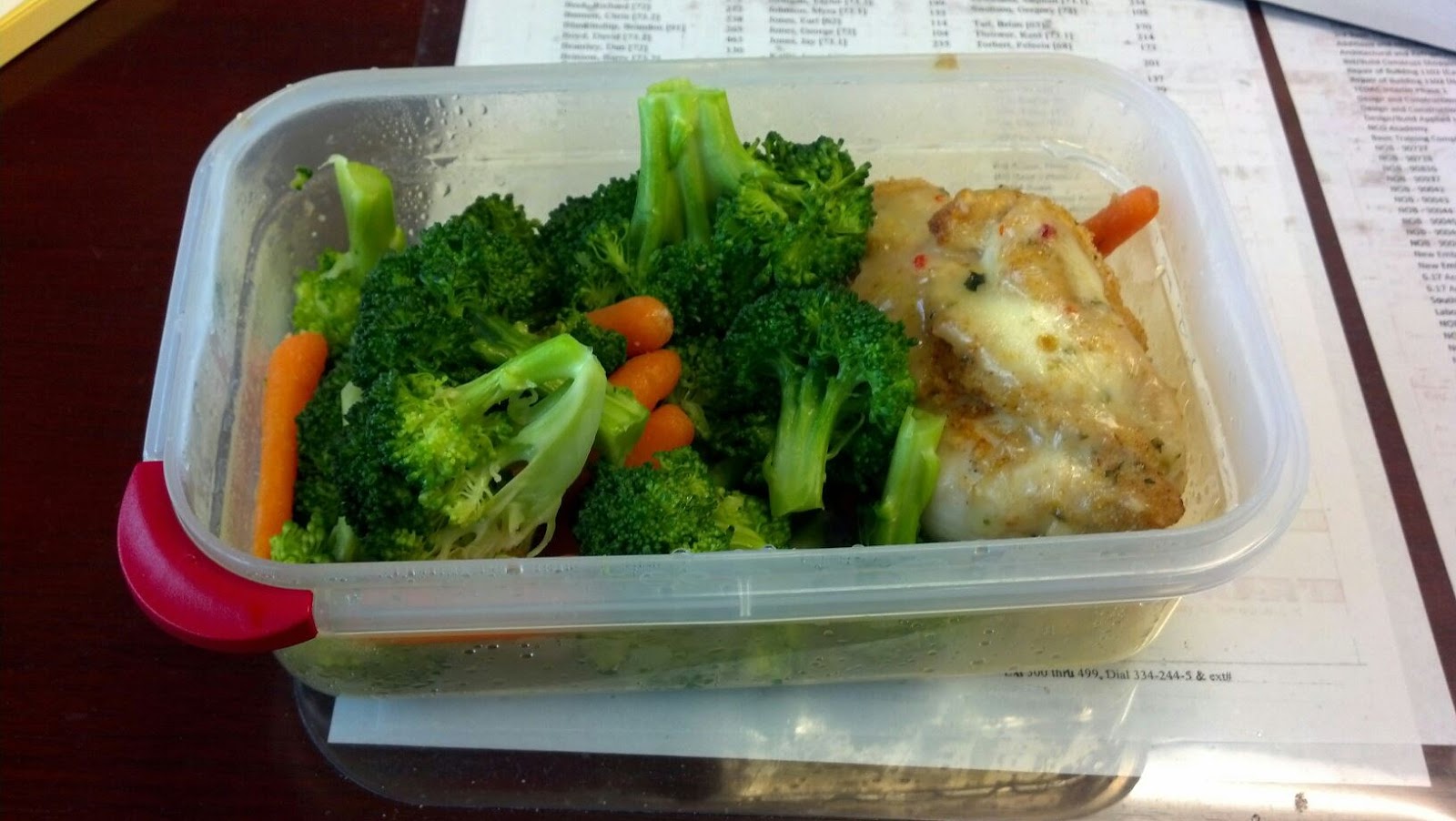
An awesome low carb lunch!


Again, this is a great recipe to make in bulk. It is also extremely low carb, so if you are calorie cycling, add in some broccoli (or your favorite green veggie) and/or carrots for a very fulfilling and delicious low carb meal. Not your low carb day? Add some roasted potatoes to your plate...DELICIOUSNESS!!!

Hope you like it!
Chef Major Pain :)


Scripture for the day:

John 20: 24-29
24 Now Thomas (also known as Didymus[a]), one of the Twelve, was not with the disciples when Jesus came.25 So the other disciples told him, “We have seen the Lord!” But he said to them, “Unless I see the nail marks in his hands and put my finger where the nails were, and put my hand into his side, I will not believe.” 26 A week later his disciples were in the house again, and Thomas was with them. Though the doors were locked, Jesus came and stood among them and said, “Peace be with you!” 27 Then he said to Thomas, “Put your finger here; see my hands. Reach out your hand and put it into my side. Stop doubting and believe.” 28 Thomas said to him, “My Lord and my God!” 29 Then Jesus told him, “Because you have seen me, you have believed; blessed are those who have not seen and yet have believed.”